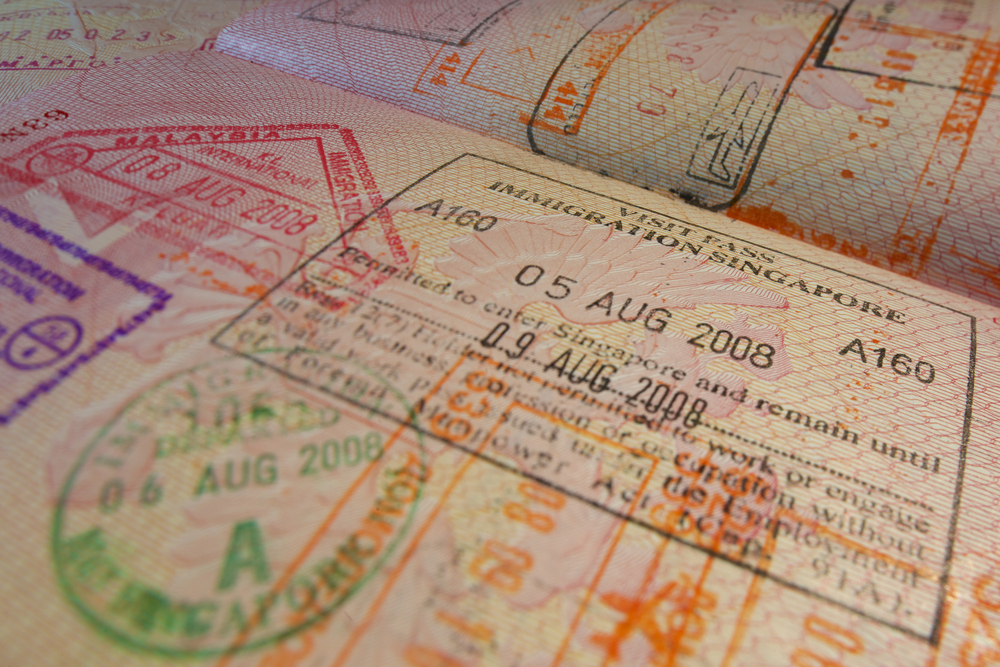
- Yes: a foreigner needs a valid MOM work pass, commonly called a work visa, before starting work in Singapore.
- Pay and job decide the pass: Work Permit, S Pass or Employment Pass.
- Eligible short-term activities can be done without a work pass, but MOM must be notified.
Yes, a foreigner who intends to work in Singapore needs a valid work pass, commonly known as a work visa, before starting work. The Ministry of Manpower (MOM) sets this rule for all foreigners, as at November 2026, and employers must check that the pass is held. The main exception is eligible short-term activities, which need no work pass but must be notified to MOM.
The content here is official information and is not legal advice.
Is a work visa the same as a work pass in Singapore?
Yes in everyday use, though MOM’s list has no pass named a work visa. MOM’s page on work passes states the rule in one sentence: “All foreigners who intend to work in Singapore must have a valid pass (commonly known as a work visa) before they start work.” The list sorts the passes into five groups: professionals; skilled and semi-skilled workers; trainees and students; family members; and exemptions and working while on a visit pass. An entry visa for visiting Singapore is a different document, set out under the rules for a tourist visa.
One Employment Pass step uses the word visa. When MOM approves an Employment Pass application, the employer receives an in-principle approval letter, which MOM describes as a pre-approved single-entry visa for the candidate to enter Singapore. The letter gives the candidate 6 months to enter Singapore and get the pass issued. The pass is issued once the candidate is in Singapore.
Which work pass fits which job and pay?
Pay and the type of job decide the pass. The three passes for workers below are the Employment Pass, the S Pass and the Work Permit for migrant workers. MOM sets no minimum salary for the Work Permit, a minimum of $3,300 a month for the S Pass and a minimum of $5,600 a month for the Employment Pass, as at November 2026.
The Work Permit for migrant workers is for workers from approved source countries or regions in the construction, manufacturing, marine shipyard, process or services sectors. The worker must be at least 18 and below 62 when applying. The permit lasts up to 2 years, depending on the validity of the worker’s passport, the security bond and the employment period. MOM does not make passes for family available to Work Permit holders. Employers face a quota for their industry, pay a monthly levy for each worker and must provide medical insurance. MOM lists separate Work Permits for migrant domestic workers and Malaysian confinement nannies.
The S Pass is for skilled workers, described by MOM as associate professionals and technicians. The fixed monthly salary must be at least $3,300, rising progressively with age to $4,800 for those in the mid-40s, and candidates in financial services need higher salaries. From 1 January 2027 the minimum becomes $3,600 for new applications, and for renewals of passes expiring from 1 January 2028. A first S Pass lasts up to 2 years and a renewal up to 3 years, and the pass can only be valid up to 1 month before the passport expires. Employers are subject to a quota and levy and must provide medical insurance. If the holder changes jobs, the new employer applies for a new pass.
The Employment Pass is for foreign professionals, managers, executives and technicians. Eligibility has two stages. Stage 1 is the EP qualifying salary: $5,600 a month at age 23 or below, rising progressively with age to $10,700 at age 45 and above. In financial services the range is $6,200 to $11,800. For new applications from 1 January 2027, and renewals of passes expiring from 1 January 2028, the range becomes $6,000 to $11,500, and $6,600 to $12,700 in financial services. Stage 2, unless the candidate is exempted, is the points-based Complementarity Assessment Framework (COMPASS), where an application needs 40 points. A candidate who misses stage 1 is not eligible, whatever the COMPASS score would have been. Before a new Employment Pass application, the employer must advertise the job on MyCareersFuture, which MOM calls the Fair Consideration Framework job advertising requirement.
MOM also lists the EntrePass, the Personalised Employment Pass and a pass for top talent in business, arts and culture, sports, and academia and research. Family passes follow the main pass: the Dependant’s Pass is for spouses and children of eligible Employment Pass or S Pass holders, and the Long-Term Visit Pass is for parents, common-law spouses, step-children or handicapped children of eligible holders.
Who applies for the pass, and how long does it take?
The employer, or an employment agent the employer appoints, applies for the worker. MOM states this for the Employment Pass, the S Pass and the Work Permit. An Employment Pass candidate does not need to be in Singapore when the employer applies, and the employer first gets the candidate’s written consent.
An Employment Pass application is made online through EP eService. The fee is $105, paid by GIRO, Visa, Mastercard or American Express. MOM says an online application is processed or given an update within 10 business days. An overseas company with no Singapore-registered office needs a local sponsor to submit the application, and MOM states a processing time of within 6 weeks for most cases.
After approval the in-principle approval letter allows the candidate 6 months to enter Singapore and have the pass issued. MOM advises employers to bring candidates in only when the pass is approved, as MOM cannot extend their visit pass. The candidate must be in Singapore when the employer gets the pass issued, and the issue fee is $225 for each pass. A notification letter, valid for 1 month from the date of issue, allows the candidate to start work and to travel in and out of Singapore while waiting for the pass card. The card arrives within 5 working days after fingerprint and photo registration, or after document verification.
Can you work in Singapore without a work pass?
Only in the cases MOM lists. The first is Work Pass Exempt Activities: eligible short-term activities can be done without a work pass, and the person must still notify MOM of the activities. The rules for those short-term business activities are set out on the business travel pass page.
Three other entries sit in the same group on MOM’s list. The Miscellaneous Work Pass is for foreign speakers, religious workers and journalists on a short-term assignment of up to 60 days. Foreigners holding a Student’s Pass issued by ICA and studying full-time at an approved school or institution have a work pass exemption. Holders of a Long-Term Visit Pass issued by ICA, meaning foreigners married to a Singaporean or permanent resident, and parents accompanying a child who is studying in Singapore, have their own work pass arrangements.
Frequently asked questions about the Singapore work visa
Is a work visa the same as a work pass in Singapore?
In everyday use, yes. MOM’s page on work passes says a valid pass, commonly known as a work visa, is needed before a foreigner starts work, as at November 2026. MOM’s list names no pass called a work visa; it names the Employment Pass, the S Pass and the Work Permit, among others. An entry visa, which concerns entering Singapore, is a different document from a work pass.
How much do you need to earn for a Singapore work pass?
The answer differs by pass, and the figures are MOM’s as at November 2026. The Work Permit has no minimum salary. The S Pass needs at least $3,300 a month, and the Employment Pass needs at least $5,600 a month at age 23 or below, rising with age to $10,700 at 45 and above. From 1 January 2027 the S Pass minimum becomes $3,600 and the Employment Pass range becomes $6,000 to $11,500 for new applications.
Can US citizens work in Singapore?
A US citizen, like every foreigner, needs a valid work pass before starting work in Singapore, as at November 2026. MOM states this rule for all foreigners who intend to work in Singapore. The pass depends on the job and pay: the Employment Pass starts at $5,600 a month and the S Pass at $3,300 a month. The employer applies for the worker, and the Employment Pass candidate does not need to be in Singapore at that point.
Who applies for a Singapore work pass?
The employer, or an employment agent the employer appoints, applies, as at November 2026. This is MOM’s rule for the Employment Pass, the S Pass and the Work Permit. For the S Pass, a new employer applies for a new pass if the holder changes jobs. An overseas company with no Singapore-registered office applies for an Employment Pass through a local sponsor, and an online application is processed or given an update within 10 business days.
Can you work in Singapore on a tourist visit pass?
Not usually. MOM requires a valid work pass before a foreigner starts work, as at November 2026. The exception on MOM’s list is eligible short-term activities, which need no work pass but must be notified to MOM. The list also has a Miscellaneous Work Pass for foreign speakers, religious workers and journalists on assignments of up to 60 days. MOM also advises employers to bring an Employment Pass candidate into Singapore only after approval.
Sources
- Ministry of Manpower: Work passes
- Ministry of Manpower: Eligibility for Employment Pass
- Ministry of Manpower: Apply for an Employment Pass
- Ministry of Manpower: Key facts on S Pass
- Ministry of Manpower: Key facts on Work Permit for migrant worker