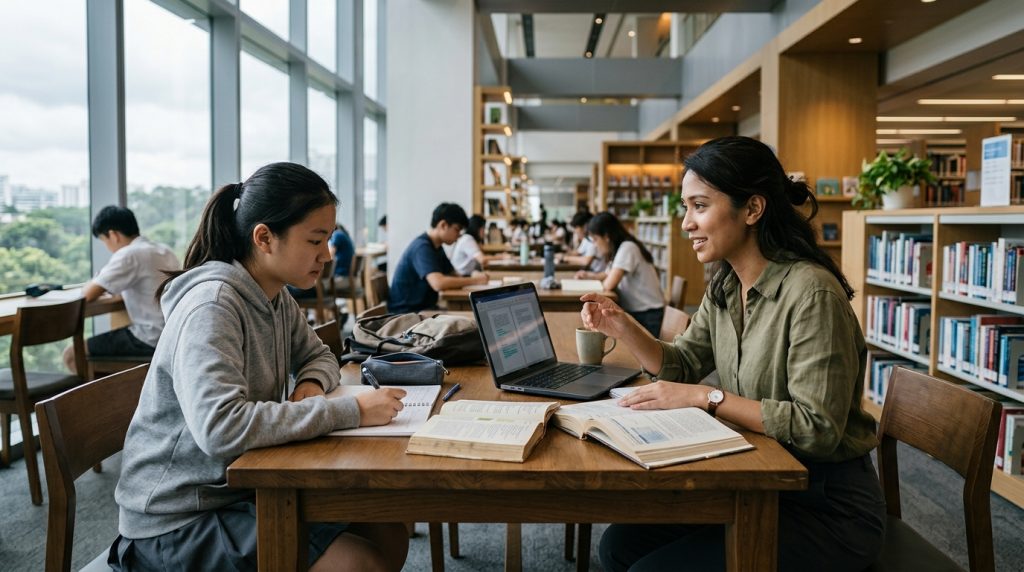
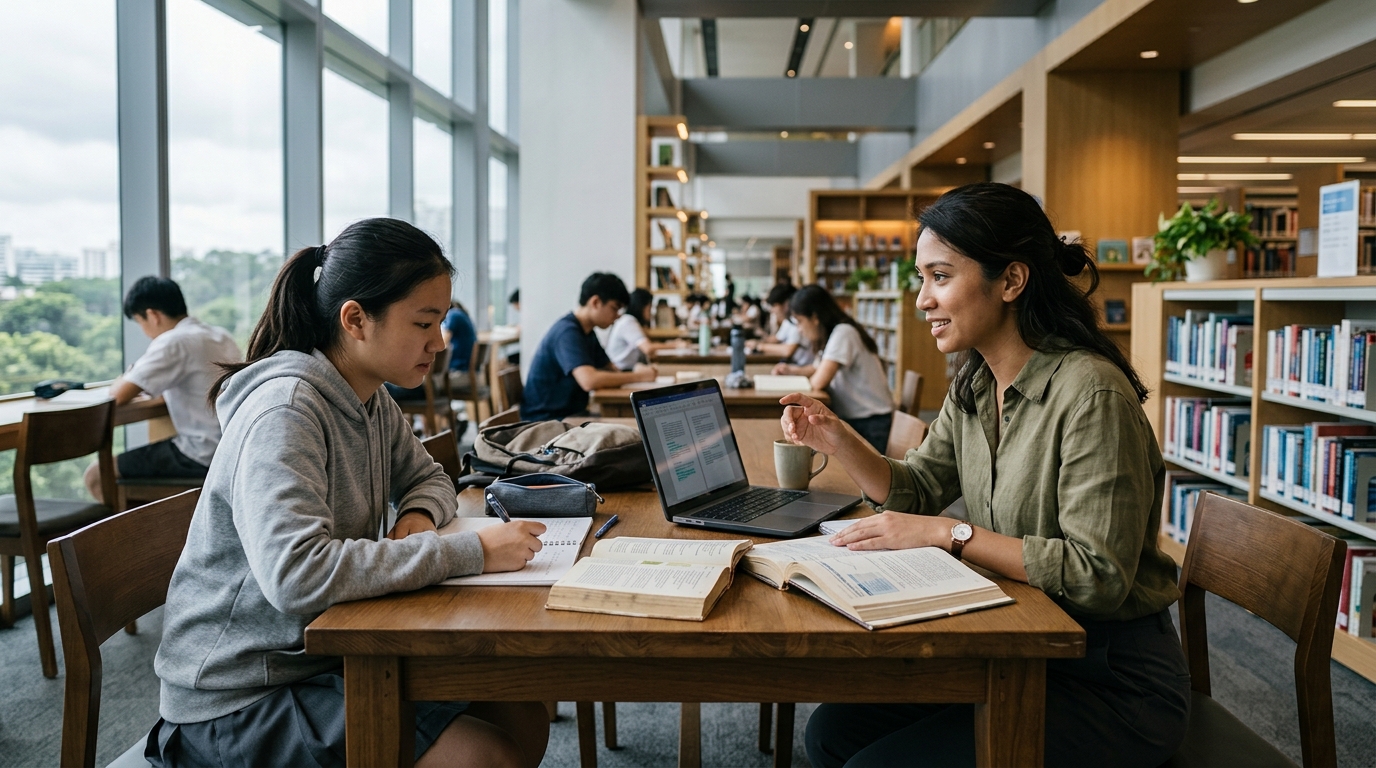
A tutor provides one-to-one or small-group academic coaching that helps students strengthen weak subjects, prepare for national exams such as the PSLE, O-Levels and A-Levels, and build study habits that carry into school. The right choice affects a child’s grades, confidence and exam outcomes, while the wrong one can cost months of lessons and thousands of dollars with little progress to show for it.
What to Look for in a Tutor in Singapore
Licensing and Credentials
Singapore does not require individual tutors to hold a licence, but tuition centres must be registered with the Ministry of Education (MOE) and tutors should show their qualifications. Ask for proof of academic results, teaching certification (such as an NIE Postgraduate Diploma in Education) and, for centres, their MOE registration number.
Insurance and Public Liability
Tutors who teach at your home carry little formal risk, but tuition centres should hold public liability cover for injuries on their premises. For home-based tutors who work with younger children, ask about background checks and whether the tutor or agency holds any liability protection.
Experience and Specialisation
Match the tutor to the syllabus and level. A tutor who knows the current MOE syllabus, including changes such as Subject-Based Banding at secondary level, will explain material the way your child’s school does. Ask how many students they have taught at the same level and what grade improvements those students achieved.
Reviews and Word of Mouth
Check Google reviews, parent forums and recommendations from your child’s classmates’ families. Look for reviews that describe specific results and teaching style rather than general praise, and treat a perfect score with very few reviews cautiously.
Transparent Quoting
A good tutor states the hourly rate, lesson length, travel charges, material fees and cancellation terms upfront. Agency placements often add a one-off fee (commonly equal to the first lesson or first month), so confirm who pays it and what it covers.
Warranty and Guarantees
Formal guarantees on grades are rare and should be viewed sceptically, but reputable tutors and centres offer a trial lesson, flexible termination notice and replacement tutors if the fit is poor. Get the refund, make-up lesson and notice period policies in writing before paying.
Questions to Ask Before Hiring
- Which MOE syllabus and exam level (PSLE, O-Level, N-Level, A-Level, IB) do you teach, and how recently did you teach it?
- Can you share anonymised examples of student progress, such as grade changes over six months?
- Do you offer a trial lesson, and is it charged at the full rate?
- How do you track progress and update parents, and how often?
- What is your cancellation and make-up lesson policy, especially around exam periods and school holidays?
- Are there agency fees, material fees or transport charges on top of the hourly rate?
- Do you teach at my home, at a centre or online, and what is your approach to supervising homework between lessons?
Red Flags to Watch Out For
- Guaranteed grade jumps: Promises such as “straight As in three months” are unrealistic and suggest the tutor is selling results rather than teaching.
- No verifiable qualifications: A tutor who cannot show academic transcripts, teaching credentials or a registered centre number should not be hired on trust alone.
- Large upfront payments: Be wary of tutors or centres demanding several months of fees in advance with no refund policy.
- Vague lesson plans: A tutor who cannot explain how they will cover your child’s weak topics, or who simply repeats school worksheets, is unlikely to add value.
- Pressure to sign immediately: Reputable tutors accept a trial lesson and let you decide afterwards, while high-pressure sales tactics point to a centre focused on enrolment numbers.

Frequently Asked Questions
How long does it take to find a good Tutor in Singapore?
Most parents find a suitable tutor within one to three weeks, allowing time to shortlist, contact candidates and complete a trial lesson. Allow longer before major exam periods such as PSLE and O-Levels, when strong tutors have limited slots.
What’s the average cost of a Tutor in Singapore?
Rates vary by level and tutor background. Typical hourly rates are SGD 25 to 40 for part-time and undergraduate tutors at primary level, SGD 40 to 70 for secondary and junior college subjects, and SGD 70 to 120 or more for full-time and former MOE teachers. Tuition centres usually charge SGD 200 to 500 per month for group classes.
Do I need to get multiple quotes for Tutors in Singapore?
Yes, comparing at least three tutors or centres gives you a realistic view of pricing, teaching approach and availability. Compare what each rate includes (lesson length, materials, travel, fees) rather than looking at the hourly figure alone.
The strongest choice rests on verified qualifications, a track record at your child’s exact level, clear written terms, honest reviews and a trial lesson that confirms the teaching style suits your child. Avoid tutors who guarantee grades or push for large prepayments, and compare at least three options before committing. To start your shortlist, see our Best Tutors in Singapore (2026).
Missing from this guide?
Tell us about your business and we'll check it at the next update.