- The Misuse of Drugs Act covers possession, consumption, import and trafficking, and its penalty tables are set by drug, amount and previous convictions.
- Consumption carries a minimum of one year in prison, and importing or trafficking above set amounts is liable to the death penalty.
- Hemp and CBD products, kratom, psilocybin mushrooms and poppy seeds are all covered by CNB’s rules.
Singapore’s drug laws sit in the Misuse of Drugs Act, as at October 2026. The official penalty tables work by drug, amount and previous convictions, and the SG Courts tables carry no tourist category. The list of what counts as a drug is wider than most visitors expect.
A visitor is packing the night before a flight. In the bag are CBD gummies bought legally at home, labelled hemp and THC-free, and a bag of poppy seed rolls for the plane. The visitor, the gummies and the rolls are assumptions for this example. The Central Narcotics Bureau (CNB) treats both items as the same kind of problem: hemp is cannabis, and poppy seeds are prohibited goods in any amount.
This is a guide to the penalties official sources publish, not legal advice on any case. Alcohol, tobacco, vapes and medicines have their own rules.
Do Singapore’s drug laws apply to tourists?
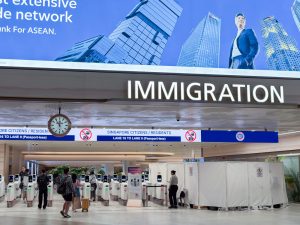
The Misuse of Drugs Act is Singapore’s main drug law. It gives CNB its enforcement powers and sets the penalties for trafficking, manufacturing, import, export, possession and consumption of controlled drugs and psychoactive substances. The Immigration and Checkpoints Authority (ICA) lists controlled drugs and psychotropic substances among the items that are not allowed to be imported.
The penalty tables published by SG Courts are organised by drug, amount and previous convictions. They have no separate category for tourists. CNB describes Singapore’s policy as one of “zero tolerance” and states that importing, exporting, possessing, selling or consuming controlled drugs, even in trace amounts, is an offence.
A separate rule on consuming drugs overseas applies to Singapore citizens and permanent residents.
What counts as a drug in Singapore?
Eleven plants, from cannabis to kratom to psilocybin mushrooms, appear on CNB’s list of plants that contain controlled drugs. CNB marks the list as not limited to those eleven.
The Act covers three groups:
- controlled drugs, which are the drugs in the First Schedule, in Classes A, B and C, and include the specified drugs;
- specified drugs, a subset of controlled drugs that can attract enhanced penalties, with cannabis, cocaine, MDMA, diamorphine (heroin), methamphetamine, ketamine, morphine and nimetazepam as examples;
- psychoactive substances, which are substances that can produce a psychoactive effect when consumed, with alcohol and caffeine excluded.
Codeine is a controlled drug but not a specified drug.
CNB’s plant list also names opium poppy, coca, peyote, the plants used in ayahuasca, sage of the diviners and khat. Kratom (Mitragyna speciosa) is on it, with mitragynine and 7-hydroxymitragynine as the controlled substances. Psilocybin mushrooms, commonly called magic mushrooms, are on it for psilocybin.
Hemp is cannabis, so hemp seed, oil, fibre and protein come from the same plant. CNB says products with hemp derivatives should not be imported or supplied. CBD oil is often claimed to come from hemp, and CNB’s position is that the plant, not the label, decides.
Poppy seeds, and any foodstuff that contains them, are prohibited goods whatever the amount or purpose. Import needs a CNB-endorsed inward declaration form, a certificate from the exporting country and a Health Sciences Authority (HSA) test. If traces of controlled substances are found, approval is not given.
Etomidate was delisted as a controlled drug on 1 May 2026. It is now a specified psychoactive substance under the Tobacco and Vaporisers Control Act.
What are the penalties for possessing or taking drugs in Singapore?
The line for cannabis sits at 330 grams. CNB publishes three bands for possession:
- under 330 grams: a maximum of 10 years in prison or a fine of S$20,000, or both;
- 330 to 500 grams: a minimum of 10 years and 5 strokes of the cane, and a maximum of 20 years and 10 strokes;
- over 500 grams: a minimum of 20 years and 10 strokes, and a maximum of 30 years and 15 strokes.
The amounts differ by drug, and the SG Courts primer lists them.
For consumption of a controlled drug, a first-time offender faces a minimum of one year in prison and a maximum of 10 years, with a fine of up to S$20,000. A first-time offender has no previous conviction for consuming a controlled drug or psychoactive substance under the Act or the Singapore Armed Forces Act. The primer sets higher minimums for repeat offenders, starting at three years for a second conviction. For psychoactive substances, a first offence carries a fine of up to S$20,000, up to 10 years in prison, or both.
What are the penalties for bringing drugs into Singapore?
ICA’s list of prohibited items, the ones not allowed to be imported, includes controlled drugs and psychotropic substances.
Trafficking includes selling, giving, administering, transporting, sending, delivering and distributing drugs, or offering to do so. Importing and exporting are offences too. The primer sets each by drug and amount, and for cannabis the bands run as follows for a first offence:
- under 330 grams: a minimum of 5 years and 5 strokes of the cane, and a maximum of 20 years and 15 strokes for trafficking, or 30 years or life and 15 strokes for import or export;
- 330 to 500 grams: a minimum of 20 years and 15 strokes, and a maximum of 30 years or life and 15 strokes;
- over 500 grams: liable to the death penalty, subject to section 33B of the Act.
Other drugs have their own lines. The primer lists the death penalty above 30 grams of cocaine, 15 grams of diamorphine and 250 grams of methamphetamine, again subject to section 33B.
Caning is not imposed on female offenders, on male offenders over 50 at the time of caning, or on male offenders sentenced to death whose sentences have not been reduced. A court can impose up to 12 months’ imprisonment instead of caning. Even with mitigating factors, a court cannot go below the mandatory minimum sentence set by law.
What should travellers leave at home?
The jar of gummies stays at home, and so does everything else on this list:
- cannabis, and hemp and CBD products;
- kratom;
- psilocybin mushrooms;
- poppy seeds, and foods that contain them.
Visitors meet other offences too, and the guide to local laws in Singapore covers them.
Frequently asked questions about Singapore’s drug laws
Is cannabis legal in Singapore?
No, cannabis is a controlled drug in Singapore, as at October 2026. CNB states that importing, exporting, possessing, selling and consuming controlled drugs, even in trace amounts, is an offence under the Misuse of Drugs Act. Possession of under 330 grams of cannabis carries a maximum of 10 years in prison or a fine of S$20,000, or both. Consumption carries a minimum of one year in prison.
Can you bring CBD oil into Singapore?
CNB’s position is that CBD oil products are often claimed to come from hemp, and hemp is cannabis, as at October 2026. Products with hemp derivatives should not be imported or supplied. Any product derived from the cannabis plant or its seeds can contain controlled drugs such as THC whatever the label says. CNB states that the importation, trafficking and possession of controlled drugs carry heavy penalties on conviction under the Misuse of Drugs Act.
Can you bring poppy seeds into Singapore?
No, poppy seeds are prohibited goods in Singapore whatever the amount or purpose, as at October 2026, and the same applies to any foodstuff that contains them. Import needs a CNB-endorsed inward declaration form, a certificate from the exporting country and an HSA test. If traces of controlled substances are found, approval is not given. A poppy seed roll in a bag falls within the rule.
What is the penalty for drug possession in Singapore?
The penalty depends on the drug and the amount, as at October 2026. For cannabis, possession of under 330 grams carries a maximum of 10 years in prison or a fine of S$20,000, or both. From 330 to 500 grams the minimum is 10 years and 5 strokes of the cane. Above 500 grams the minimum is 20 years and 10 strokes. Other drugs have their own amounts, listed in the SG Courts primer.
Is there a death penalty for drugs in Singapore?
Yes, the death penalty is listed for trafficking, importing and exporting above set amounts, as at October 2026. For cannabis the line is over 500 grams, and CNB describes that band as liable for the death penalty. The SG Courts primer shows it as subject to section 33B of the Misuse of Drugs Act. The primer sets other amounts by drug, such as 30 grams of cocaine and 15 grams of diamorphine.
Sources
- SG Courts: Drug Penalties primer
- Central Narcotics Bureau: Singapore’s anti-drug laws on Cannabis
- Central Narcotics Bureau: Frequently Asked Questions
- Central Narcotics Bureau: Plants that contain controlled drugs
- Immigration and Checkpoints Authority: What You Can Bring