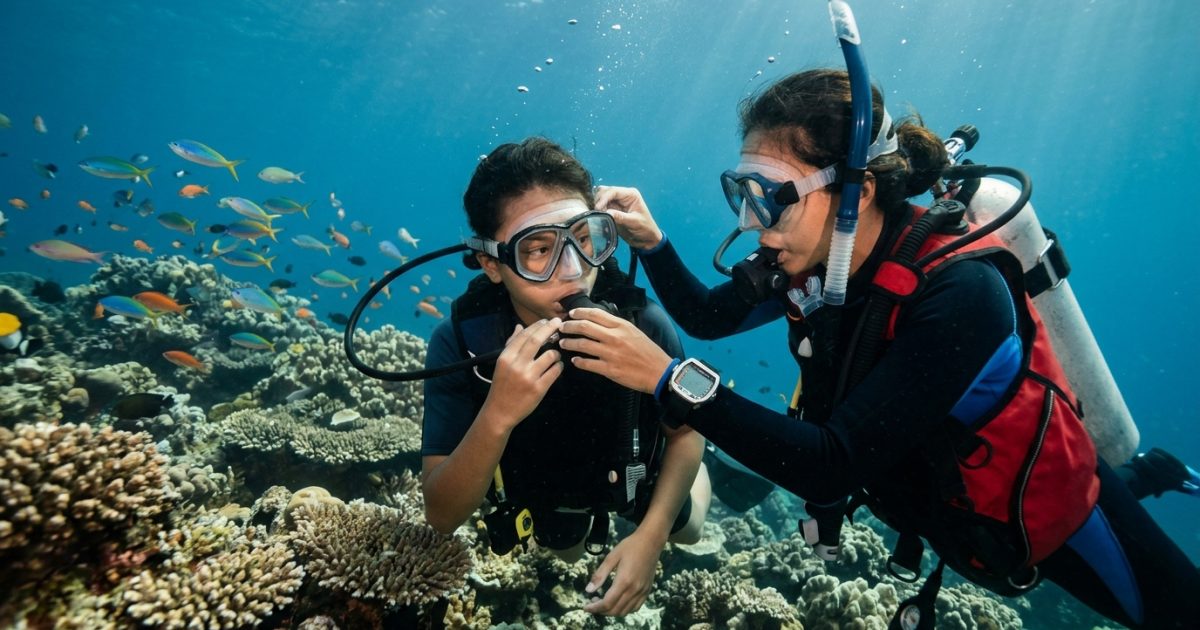
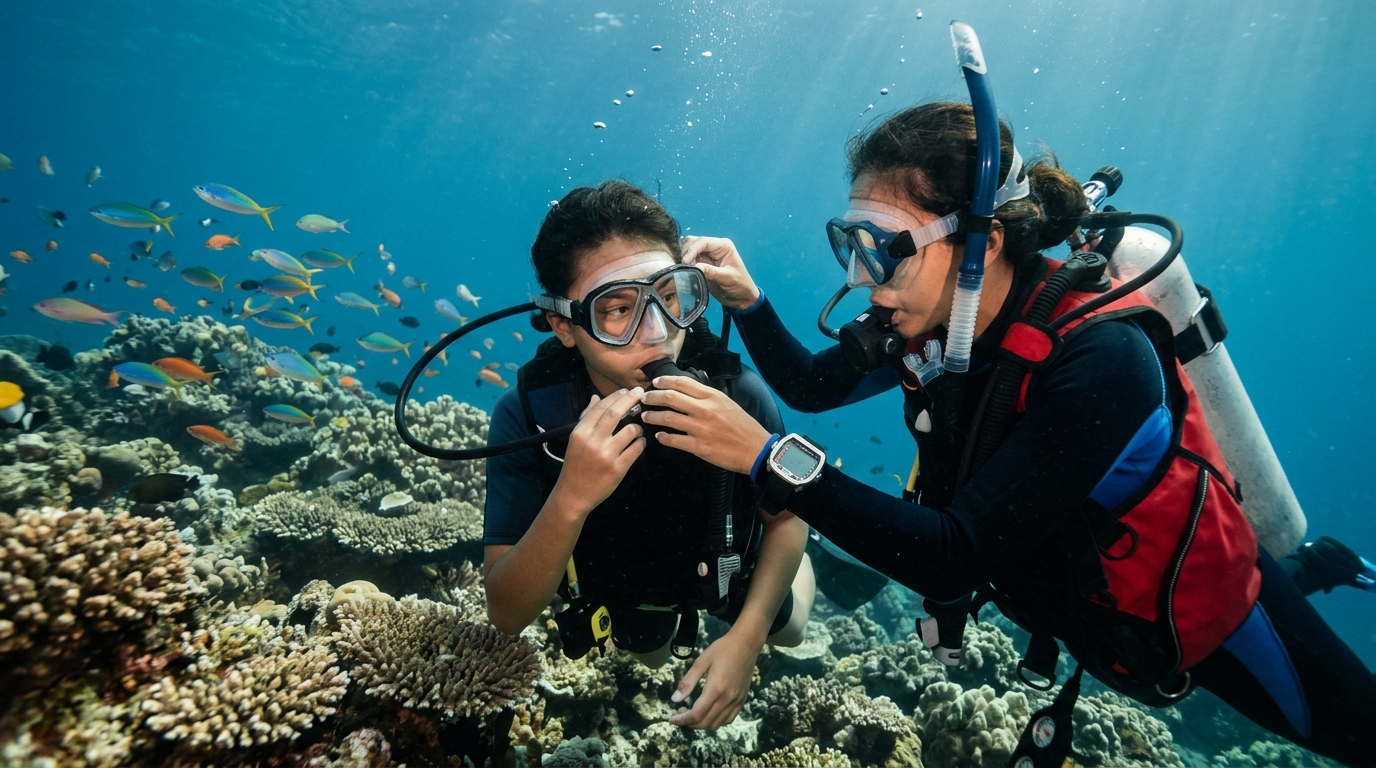
A dive school teaches you to plan, execute, and safely complete scuba dives, from entry-level open water certification through to advanced and specialty courses. Picking the wrong school in Singapore can leave you with a certification that doesn’t meet international standards, equipment that isn’t fit for purpose, or instructors who rush you through skills before you’re ready.
What to Look for in a Dive School in Singapore
Licensing and Credentials
Any reputable dive school in Singapore should be affiliated with a globally recognised certification agency such as PADI, SSI, or NAUI. Check that individual instructors hold current instructor ratings from that agency, as certifications can lapse if continuing education requirements aren’t met.
Insurance and Public Liability
Dive schools should carry public liability insurance and, at minimum, encourage students to hold dive accident insurance such as DAN (Divers Alert Network) coverage before entering open water. Ask to see proof of the school’s insurance rather than accepting a verbal assurance.
Experience and Specialisation
Some Singapore dive schools focus on recreational courses for beginners, while others specialise in technical diving, rescue training, or dive master programmes. Match the school’s area of focus to your current level and where you want to progress, rather than enrolling wherever has the next available start date.
Reviews and Word of Mouth
Check Google, TripAdvisor, and dive forums such as ScubaBoard for consistent patterns in feedback, paying particular attention to comments about instructor patience, student-to-instructor ratios, and how complaints were handled. A handful of negative reviews isn’t unusual, but recurring themes around safety or misleading course descriptions are a genuine concern.
Transparent Quoting
A trustworthy school provides a written breakdown of what’s included in the course fee, covering equipment hire, pool sessions, open water dives, certification fees, and any compulsory textbooks or e-learning access. Be wary of a headline price that climbs significantly once add-ons are listed.
Warranty and Guarantees
Reputable dive schools stand behind their training by offering free or discounted remedial sessions if a student struggles to pass a skill assessment. Ask whether the school has a clear policy on what happens if you don’t complete the course within the scheduled timeframe.
Questions to Ask Before Hiring
- Which certification agency are your instructors affiliated with, and are their ratings current?
- What is the maximum student-to-instructor ratio during pool sessions and open water dives?
- Where are open water checkout dives conducted, and what is the typical visibility and depth at those sites?
- Does the course fee include all equipment, or will I need to hire or purchase any gear separately?
- What happens if I fail a skill assessment mid-course? Is there a cost for additional sessions?
- Do you carry public liability insurance, and do you recommend students obtain DAN dive accident insurance before open water dives?
- Are your courses conducted primarily in English, and are instructors available to communicate in other languages if needed?
Red Flags to Watch Out For
- Red flag: The school cannot provide the full name or rating number of the instructor assigned to your course, making it impossible to verify their credentials directly with the certification agency.
- Red flag: Pool training is compressed into a single half-day session before open water dives begin, giving students insufficient time to build confidence with core skills.
- Red flag: The quoted price excludes the certification fee, which is then presented as a mandatory extra at the end of the course when you’re committed to completing it.
- Red flag: The school cannot confirm the dive sites used for checkout dives, or uses sites with poor visibility that make skill assessment genuinely difficult for beginners.
- Red flag: Reviews mention that instructors signed off students on skills they hadn’t fully demonstrated, a pattern that creates unsafe divers and signals a school prioritising throughput over training quality.
Frequently Asked Questions
How long does it take to find a good Dive School in Singapore?
Allowing one to two weeks for research is reasonable. Read at least ten to fifteen reviews per school across multiple platforms, ask for recommendations in Singapore diving communities on Facebook or Reddit, and contact two or three shortlisted schools with direct questions before committing.
What’s the average cost of a Dive School in Singapore?
An entry-level PADI or SSI Open Water course in Singapore typically runs between SGD 450 and SGD 750, depending on whether equipment hire, e-learning, and certification fees are bundled in. Advanced Open Water courses generally range from SGD 500 to SGD 900, and Divemaster programmes can reach SGD 2,500 or more.
Do I need to get multiple quotes for Dive Schools in Singapore?
Getting quotes from at least three schools helps you understand what a fair package looks like and exposes meaningful differences in what’s included. Price alone shouldn’t drive the decision, since instructor ratios, equipment quality, and dive site conditions vary enough to justify paying more at a school with a stronger safety record.
The most important factors in choosing a dive school in Singapore are verified instructor credentials, clear student-to-instructor ratios, transparent pricing that includes certification fees, and a demonstrated track record of safe open water training. A school that answers questions directly and willingly provides documentation is far more reliable than one with the cheapest advertised price. To compare the top-rated options in the city, visit our guide to the Best Dive Schools in Singapore (2026).