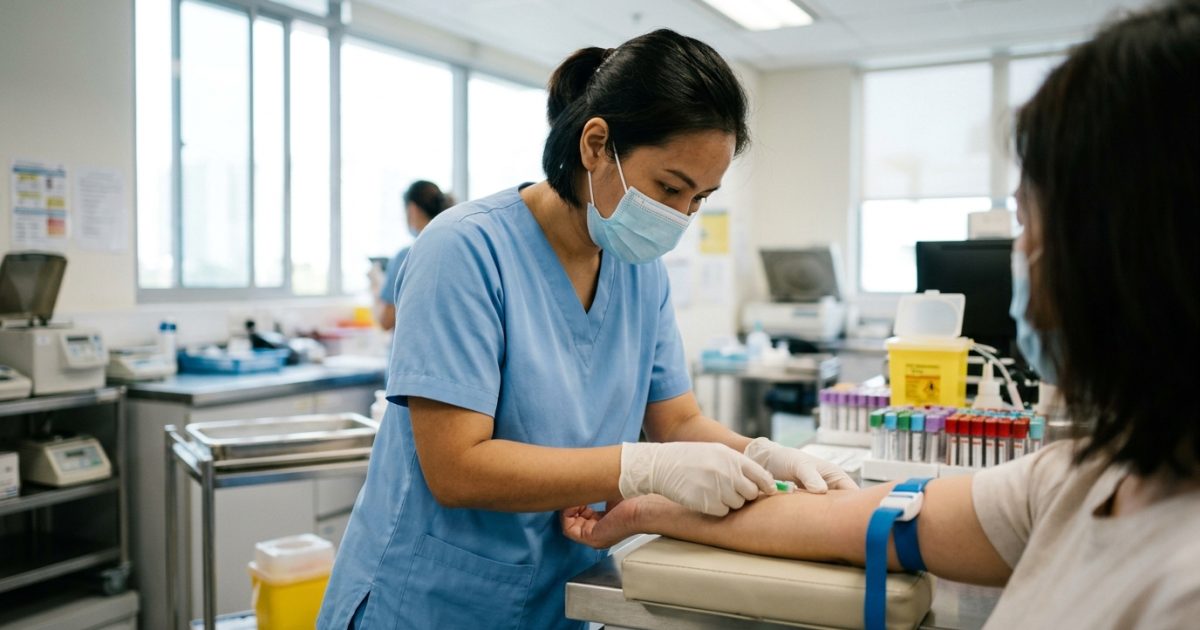
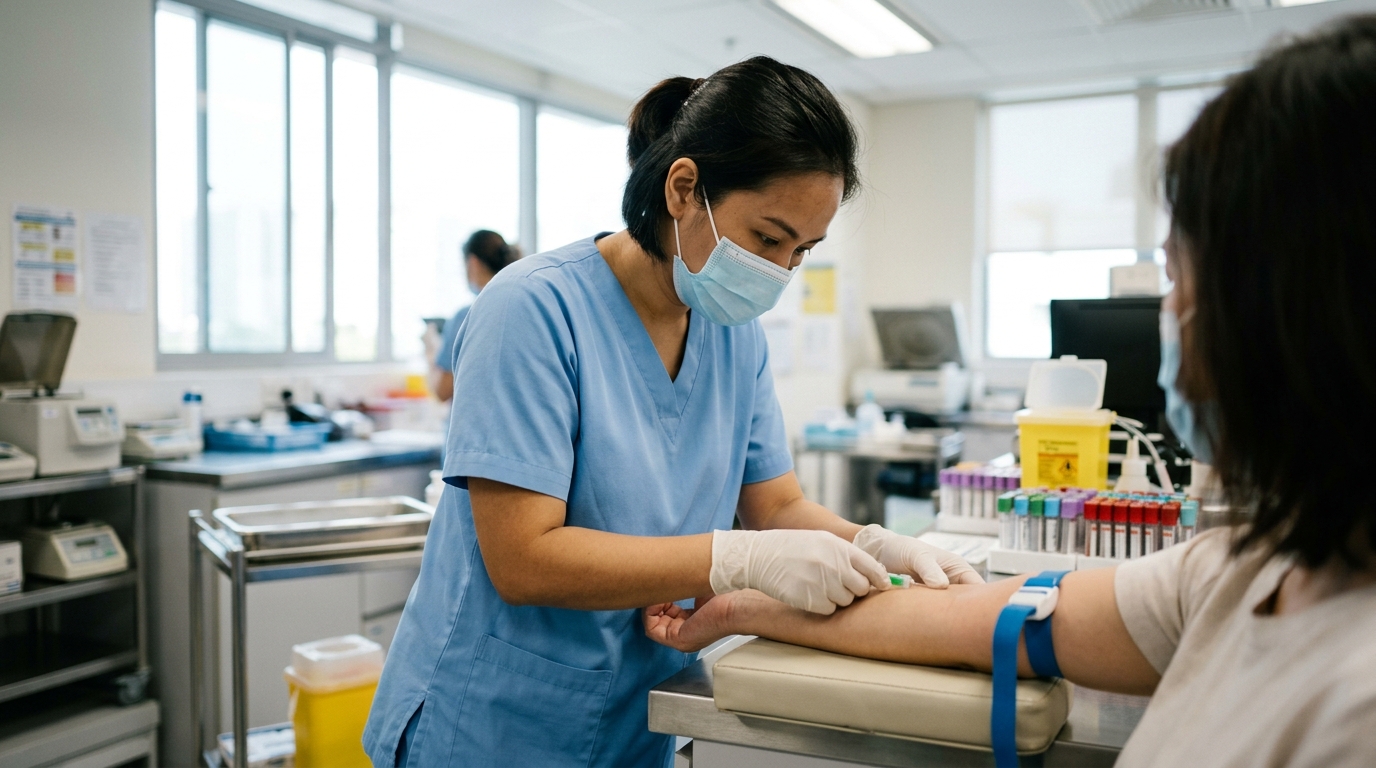
Phlebotomy courses in Singapore are offered by several private training providers and healthcare institutions, typically running between one day and four weeks depending on the programme level. These courses cover venepuncture technique, patient safety, specimen handling, and infection control, and are aimed at healthcare support staff, medical assistants, and those entering clinical laboratory roles.
Where to Study Phlebotomy in Singapore
The most established providers include the Singapore Red Cross Academy, Parkway College of Nursing and Allied Health, and various private healthcare training centres such as First Response Academy and the Allied Health Training Centre. Some polytechnics, including Nanyang Polytechnic, incorporate phlebotomy as a module within their Medical Laboratory Technology or Nursing programmes rather than offering it as a standalone short course.
Private providers typically run weekend or weekday cohorts, with intake available multiple times a year. Course fees generally range from SGD 300 to SGD 900 for short certificate programmes, depending on the provider and whether practical clinical hours are included.
What the Course Covers
A standard phlebotomy course in Singapore includes both theory and supervised hands-on practice. Theory components cover human anatomy relevant to venepuncture, blood collection equipment, order of draw, specimen labelling, biohazard protocols, and patient communication. Practical sessions are conducted using simulation arms and, in some programmes, with actual clinical exposure at affiliated clinics or hospitals.
Completion results in a certificate of attendance or competency, though Singapore does not currently have a nationally regulated phlebotomy licence. Employers in polyclinics, hospitals, and diagnostic laboratories typically require candidates to complete an accredited course and undergo additional on-the-job training before working independently.
Who These Courses Are For
Most phlebotomy short courses in Singapore accept applicants with at minimum a GCE O-Level qualification or equivalent. Prior healthcare experience is useful but not always required for entry-level programmes. The courses are commonly attended by medical laboratory assistants, nursing aides, clinic assistants transitioning to clinical duties, and individuals seeking employment with diagnostic service providers such as Raffles Medical, Thomson Medical, or public health clusters under SingHealth and NUHS.

Frequently Asked Questions
Is phlebotomy certification recognised across Singapore’s public and private healthcare sectors?
There is no single mandated certification body for phlebotomy in Singapore. Public health institutions such as those under MOH Holdings tend to set their own competency requirements, while private employers look for candidates who have completed a structured course with practical components. Completing a course from a recognised provider strengthens your application, but on-the-job assessment remains part of the standard hiring process across most facilities.
How long does a phlebotomy course take in Singapore?
Short certificate courses typically run one to five days for the basic skills component. Some programmes extend to two to four weeks when clinical attachment hours are included. Longer formats are common with providers affiliated with hospitals, where supervised patient contact is a core part of the curriculum.
Can I take a phlebotomy course part-time or on weekends?
Yes. Several private training centres in Singapore schedule phlebotomy courses on weekends specifically to accommodate working adults. It is worth contacting providers directly for their current intake schedules, as cohort sizes are usually small and fill up ahead of the advertised date.