
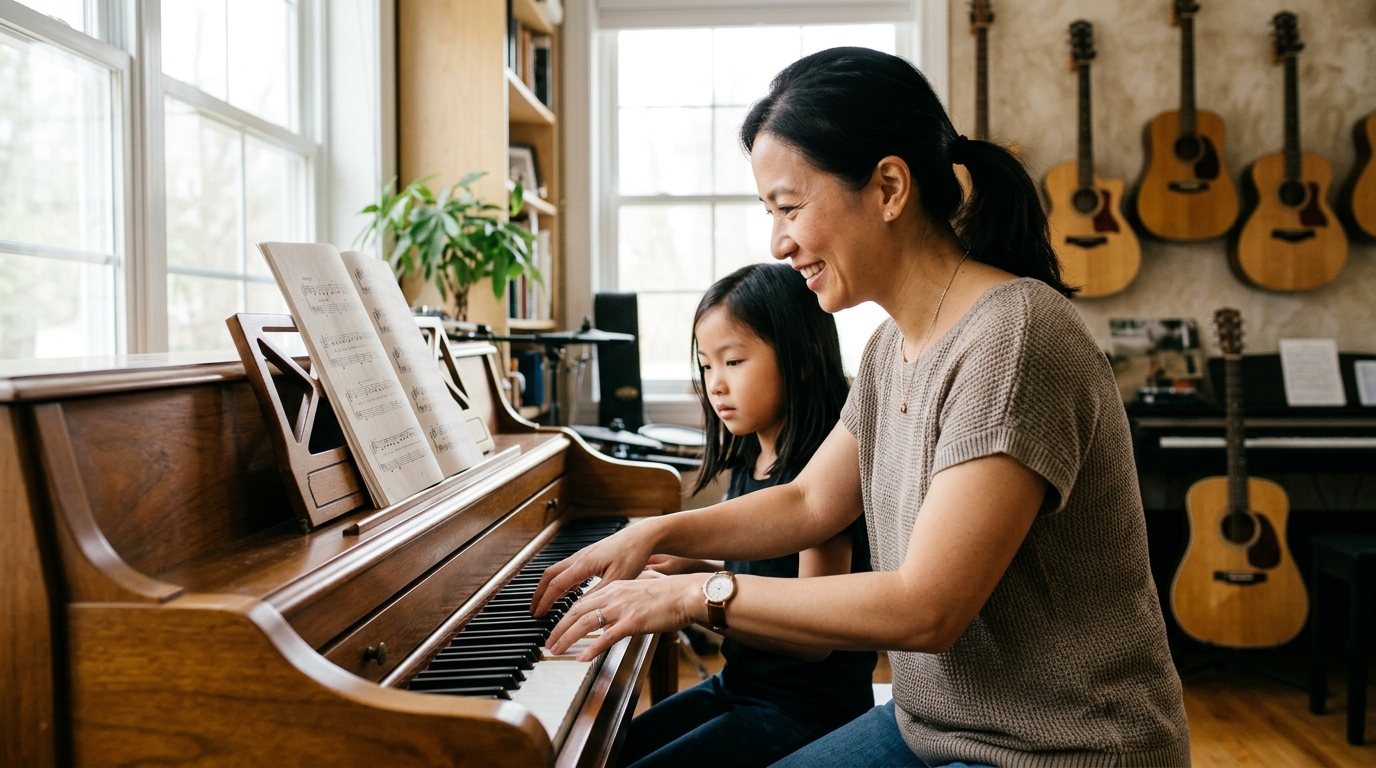
A music school teaches students to play instruments, develop vocal technique, read notation, and build musical knowledge under the guidance of qualified instructors. The school you choose shapes how quickly a student progresses, how motivated they stay, and whether they receive teaching that matches their goals and learning style.
What to Look for in a Music School in Singapore
Licensing and Credentials
Reputable music schools in Singapore often employ teachers who hold qualifications from recognised institutions such as the Associated Board of the Royal Schools of Music (ABRSM), Trinity College London, or local conservatories like the Yong Siew Toh Conservatory. Ask whether the school’s teachers hold formal teaching diplomas rather than performance grades alone, as the two are distinct qualifications.
Insurance and Public Liability
Any school operating from a physical studio in Singapore should carry public liability insurance to cover students in the event of an accident on the premises. If the school sends teachers to your home, confirm that those teachers are covered under the school’s insurance policy, not solely their own personal arrangements.
Experience and Specialisation
Some schools focus on classical graded programmes, while others concentrate on contemporary styles, music production, or early childhood music. Match the school’s primary focus to the student’s goals, and check how many years the school has been operating and whether its teachers have active performing or recording experience in the relevant genre.
Reviews and Word of Mouth
Google reviews, Facebook recommendations, and local parent forums such as KiasuParents are practical starting points for gauging real student and parent experiences. Look for patterns across multiple reviews rather than relying on a single five-star or one-star outlier.
Transparent Quoting
A trustworthy music school will clearly state its lesson fees, registration costs, material fees, and any annual recital charges before you enrol. Be cautious of schools that advertise low per-lesson rates but add on significant hidden fees once you commit.
Warranty and Guarantees
Look for schools that offer a trial lesson or a satisfaction guarantee on the first session, which allows you to assess teaching quality before paying for a full term. Some schools also guarantee a teacher replacement at no extra cost if the assigned instructor is not a good fit for the student.
Questions to Ask Before Hiring
- What qualifications and teaching experience does the assigned teacher hold, and are they a full-time employee or a freelance contractor?
- What is the full fee structure, including registration, materials, examination entry fees, and any recital or concert costs?
- What is the lesson cancellation and make-up policy if a student or teacher is unwell?
- Does the school prepare students for ABRSM, Trinity, or other recognised examinations, and is exam preparation included in standard lessons or charged separately?
- How large are group classes, and what is the typical student-to-teacher ratio for ensemble or theory lessons?
- Is there a trial lesson available, and what is the minimum commitment period before fees are locked in?
- Does the school have soundproofed practice rooms, and can students book studio time outside of scheduled lessons?
Red Flags to Watch Out For
- Red flag: The school cannot name the specific qualifications held by the teacher who will be assigned to your child, and deflects the question with vague language about experience.
- Red flag: Fees are quoted verbally with no written breakdown, and the school resists providing a formal fee schedule before enrolment.
- Red flag: High teacher turnover is visible in reviews, with multiple parents reporting that their child had three or more different teachers within a single year.
- Red flag: The school requires payment of a full semester or year upfront before the student has completed any trial lesson.
- Red flag: The studio premises appear poorly maintained, instruments are in disrepair, and there is no visible system for instrument sanitisation between students.

Frequently Asked Questions
How long does it take to find a good Music School in Singapore?
A focused search, including shortlisting three to five schools, attending trial lessons, and reviewing fee structures, typically takes two to four weeks. Singapore has a large number of music schools concentrated in areas like Toa Payoh, Buona Vista, and the city centre, so booking trial lessons across multiple locations in one weekend is practical. Starting the search at least a month before the intended enrolment date gives enough time to compare options without pressure.
What’s the average cost of a Music School in Singapore?
Group lessons for children typically range from SGD 25 to SGD 60 per session, while individual lessons from qualified teachers generally fall between SGD 60 and SGD 150 per hour depending on the teacher’s credentials and the school’s location. Trial lessons, where offered, usually cost between SGD 30 and SGD 50. Registration fees at established schools commonly range from SGD 50 to SGD 150, paid once at enrolment.
Do I need to get multiple quotes for Music Schools in Singapore?
Comparing at least three schools is a sensible approach, as fee structures, teacher qualifications, and lesson formats vary considerably across providers. A side-by-side comparison also makes it easier to spot schools that charge separately for items others include as standard. Attending a trial lesson at each shortlisted school gives you a direct sense of teaching style before committing financially.
Choosing the right music school comes down to verifying teacher credentials, understanding the full cost before you sign anything, reading recent independent reviews, and attending at least one trial lesson. A school that is transparent about fees, offers a satisfaction guarantee, and can clearly explain its teaching methodology is far more likely to deliver consistent progress than one that relies on glossy marketing alone. For a curated list of top-rated providers, see the Best Music Schools in Singapore (2026).