Quick price summary: Electricians in Singapore (2026)
- Low end: SGD $60 – $120 for basic repairs and single-point fixes
- Mid-range: SGD $150 – $400 for standard installations and multi-point work
- High end / enterprise: SGD $500 – $2,000+ for full rewiring, DB upgrades, and commercial projects
Prices in Singapore Dollars (SGD). Last updated 2026.
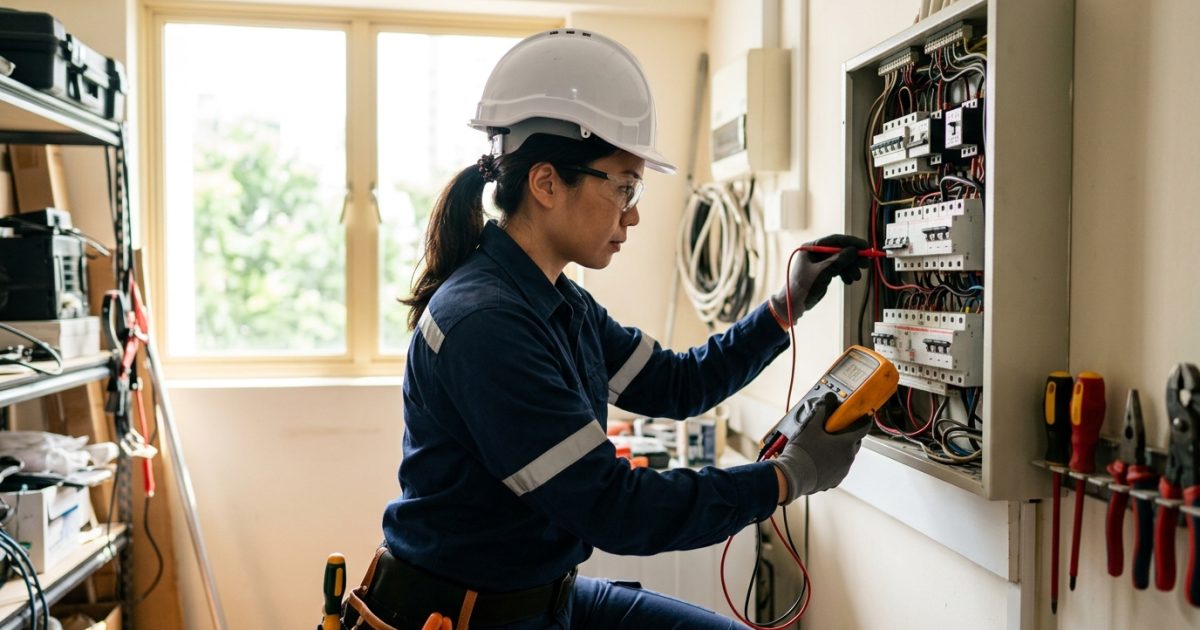
Electrical work in Singapore covers a wide spectrum of jobs, from replacing a faulty power socket in an HDB flat to rewiring an entire condo unit during renovation, or carrying out distribution board upgrades in a commercial space. The category includes licensed electricians who can legally carry out fixed wiring work under the Energy Market Authority (EMA) framework, as well as electrical workers who handle less regulated tasks such as light fixture installations or ceiling fan replacements. Knowing which type of job you need done, and which credentials your electrician should hold, is the first step to budgeting accurately.
Costs vary significantly across Singapore because no single rate governs the industry. A job quoted at SGD $80 by one provider might be SGD $180 from another, and both figures can be legitimate depending on the scope, the contractor’s overheads, and whether a site survey fee is included. Property type also plays a role: HDB flats, condos, and commercial units each come with different access arrangements, wiring configurations, and safety requirements that affect the final price.
What Do Electricians Cost in Singapore?
For straightforward repairs, such as fixing a tripped circuit, replacing a light switch, or swapping out a single power point, most licensed electricians in Singapore charge between SGD $60 and $120 for the first hour of labour, with additional hours billed at SGD $40 to $90 depending on the firm. A ceiling fan installation typically runs SGD $80 to $150, while installing a new power socket or outlet sits around SGD $80 to $120 per point. Concealed wiring work costs more than exposed trunking because it requires more time and carries greater complexity behind the walls.
Larger projects shift the pricing considerably. A partial rewire covering one or two rooms in an HDB flat can cost SGD $400 to $800, while a full-unit rewire for a larger condo or landed property ranges from SGD $1,500 to $4,000 or more. Distribution board (DB) replacements or upgrades generally fall between SGD $500 and $1,200. Commercial electrical work is quoted project-by-project, with rates for industrial or office fit-out work often starting at SGD $1,000 and climbing well above SGD $5,000 for extensive installations.
Price Breakdown by Service Level
| Service Level | What You Get | Typical Price Range (SGD) | Best For |
|---|---|---|---|
| Basic | Single-point repairs: replacing a faulty socket, light switch, or circuit breaker; basic safety checks | $60 – $150 | HDB owners with minor faults, quick fixes, emergency call-outs |
| Standard | Ceiling fan or light installation, adding new power points, exposed trunking work, minor wiring repairs across 1–2 rooms | $150 – $500 | Homeowners renovating a room or upgrading fixtures in an HDB or condo |
| Premium | Full-room or partial-unit rewiring, concealed wiring, DB board upgrades, LED track lighting installation, safety inspections with certification | $500 – $2,000 | Condo or landed property owners doing significant renovation work |
| Enterprise / Custom | Full-unit rewiring, commercial fit-outs, industrial installations, new circuit runs, large-scale lighting systems, BCA-licensed contractor engagement | $2,000 – $8,000+ | Commercial property managers, landlords, developers, and large renovation projects |
What Affects the Cost of Electricians in Singapore?
Type and complexity of the work
Replacing a power socket is a contained job that takes under an hour. Running new circuits from the distribution board, installing concealed wiring through existing walls, or adding multiple outlets across a unit is a different scale of work entirely. The more points, circuits, or rooms involved, the higher the labour and materials cost. Concealed wiring work adds time because electricians must route cables through cavities and patch surfaces afterwards, while exposed trunking along walls is quicker and cheaper.
Property type and access conditions
HDB flats generally have standardised layouts that electricians are familiar with, which can keep costs predictable. Older HDB units may have outdated wiring that complicates even simple jobs. Condos often require contractor registration with building management before work begins, which adds administrative steps. Landed properties with multiple floors or complex existing wiring systems take longer to assess and service. Commercial spaces in shophouses or office buildings add further layers of access coordination and compliance requirements.
Licensing and certification requirements
In Singapore, any fixed electrical installation work must be carried out by an EMA-licensed electrical worker (LEW) or done under their direct supervision. Engaging a properly licensed and insured electrician costs more than hiring an unlicensed handyman, but it is the only legal path for most wiring work. Some projects, particularly in commercial buildings, also require a Licensed Electrical Worker to submit and endorse plans with SP Group or the relevant authority. These compliance steps are factored into the quote.
Emergency and after-hours rates
Standard call-out fees in Singapore range from SGD $70 to $120 during business hours. Evening, weekend, and public holiday call-outs typically attract a surcharge of SGD $30 to $80 on top of the base rate. If you need an electrician urgently, especially outside of office hours, expect to pay a premium. Some firms charge a flat emergency fee; others apply an hourly rate from the moment the electrician leaves their base.
Materials and parts
Labour is one part of the bill; materials are another. Sockets, switches, circuit breakers, wiring cable, trunking, and light fittings all have a cost that gets passed on. Some electricians quote labour and materials separately; others bundle everything into a single rate. Always confirm whether your quote includes parts. Reputable providers will itemise materials so you can compare like for like across quotes.
How to Get Accurate Quotes
- List every job you need done before you contact anyone. Vague requests such as “some electrical work” will produce vague quotes. Write down each specific task: the number of sockets, the type of lights, whether wiring is concealed or exposed, and so on.
- Request a site survey. Many reputable electricians in Singapore offer a site inspection, sometimes at no charge, sometimes for a fee of SGD $30 to $80 that is credited against the job if you proceed. A survey produces a more accurate quote than a phone estimate.
- Get at least three quotes from different licensed providers. Compare them line by line: labour rate, materials cost, call-out or survey fee, and any additional charges for after-hours or concealed work.
- Confirm the electrician holds a valid EMA licence. You can verify LEW status through the EMA’s public register. For larger commercial jobs, check whether the firm holds a BCA-licensed electrical contractor registration as well.
- Ask what is not included. Some quotes exclude materials, plastering after concealed wiring, or permit fees. Knowing what falls outside the quoted price prevents surprises on the final invoice.
Red Flags to Watch Out For
- Quotes given over the phone with no site visit for anything beyond a single-point repair. Accurate pricing for wiring or DB work requires a physical inspection.
- No mention of EMA licensing or any documentation of qualifications. Unlicensed electrical work is illegal for fixed installations in Singapore and leaves you liable if something goes wrong.
- Prices that seem dramatically lower than market rates, often by 40% or more. This usually means unlicensed labour, substandard materials, or work that does not comply with Singapore’s wiring regulations.
- No written quote before work begins. A professional electrician should provide a written scope of work and price, even for smaller jobs. Verbal-only quotes make disputes about the final cost very difficult to resolve.
- Pressure to pay a large deposit upfront, particularly in cash, before any inspection has taken place. Standard practice in Singapore is a modest deposit or no deposit at all for small jobs, with payment on completion.
- No insurance or liability coverage. If an electrician causes damage to your property or an injury occurs during the job, you need confirmation that they carry adequate coverage before work begins.
Frequently Asked Questions
How much do electricians cost in Singapore on average?
For common residential jobs, the average cost of an electrician in Singapore sits between SGD $80 and $250. Simple tasks like replacing a power socket or installing a ceiling fan fall at the lower end. Multi-point jobs, DB upgrades, or rewiring work push prices higher. A standard call-out during business hours, including the first hour of labour, typically costs SGD $80 to $150. Most homeowners dealing with routine repairs will spend SGD $100 to $200 per visit once labour and any parts are included.
Why are some electricians prices so much cheaper?
Lower prices often reflect one of a few situations: the provider is unlicensed and cannot legally carry out fixed wiring work, substandard or non-compliant materials are being used, the quote excludes materials or a call-out fee that will appear on the final invoice, or the electrician is new to the market and pricing below sustainable rates to win jobs. Occasionally a genuinely competitive price comes from a firm with lower overheads, but a quote significantly below the market average warrants careful scrutiny before you commit.
Is it worth paying more for electricians in Singapore?
For any work involving fixed wiring, circuits, or your distribution board, engaging a licensed and experienced electrician is worth the additional cost. Faulty or non-compliant electrical work is a fire and safety risk, and it can also create legal and insurance problems if you are a landlord or a commercial property operator. For minor tasks like replacing a light fitting or a power point, a mid-range quote from a licensed provider delivers a reasonable balance of cost and assurance. The cheapest option rarely accounts for the cost of fixing mistakes.
Getting electrical work done properly in Singapore means understanding what you are paying for, confirming the credentials of whoever you hire, and comparing written quotes before any work begins. Prices across the market vary widely, but the ranges in this guide give you a solid baseline for assessing whether a quote is reasonable. For any job beyond a basic repair, a site survey is the most reliable way to get a price you can actually plan around.