
Quick price summary: Croissant in Singapore (2026)
- Low end: SGD $2 – $4
- Mid-range: SGD $5 – $8
- High end / enterprise: SGD $9 – $15+ (bulk orders, bespoke flavours, catering trays)
Prices in Singapore local currency (SGD). Last updated 2026.
Croissants in Singapore span a wide price spectrum, from mass-produced supermarket versions at around SGD $2 to freshly baked, in-house laminated viennoiseries at artisan bakeries that can reach SGD $12 or more for a single piece. The category covers classic butter croissants, pain au chocolat, cheese-filled variants, Japanese-style croissants, and signature flavours developed by individual bakeries. Whether you are buying one croissant with your morning coffee or ordering a tray of 20 for an office breakfast, the price per piece changes considerably depending on where and how you buy.
Costs vary because of the labour involved in proper lamination, the quality of butter used, whether dough is made in-house or sourced from a supplier, and the rental costs of the bakery’s location. A croissant made with French AOP butter, hand-laminated over two to three days, and baked fresh each morning costs significantly more to produce than one baked from a frozen par-baked block. Both are called croissants on the menu, so knowing what you are paying for matters.

What Do Croissant Cost in Singapore?
At the budget end, chain bakeries and supermarket in-store bakeries typically price plain butter croissants between SGD $2 and $4. Taiwanese chain Hazukido, which specialises in Japanese-style croissants with a distinct flaky pull-apart texture, prices its croissants in the SGD $3 to $5 range depending on flavour, making it one of the more affordable options for a freshly baked product. Standard French-style bakeries and neighbourhood cafes generally sit in the SGD $4 to $6 range for a classic croissant or pain au chocolat.
Artisan and specialty bakeries charge SGD $6 to $10 for a single croissant. Places like Keong Saik Bakery, Brotherbird (a halal-certified eatery with multiple locations), and La Levain use in-house lamination processes and premium butter, which justifies the higher price point. Signature and limited-edition flavours, such as truffle, miso, or seasonal fruit fillings, can push individual prices to SGD $10 to $15. Bulk and catering orders typically attract a per-piece discount, but minimum order quantities often apply.
Price Breakdown by Service Level
| Service Level | What You Get | Typical Price Range | Best For |
|---|---|---|---|
| Budget | Supermarket or chain bakery croissant, often par-baked; plain butter or basic cheese varieties | SGD $2 – $4 per piece | Everyday breakfast, price-conscious buyers |
| Standard | Café or mid-range bakery croissant; freshly baked daily, classic butter or pain au chocolat, may use imported butter | SGD $4 – $6 per piece | Regular café visitors, quality-conscious daily buyers |
| Premium | Artisan bakery with in-house lamination, French or European butter, signature flavours, freshly baked in small batches | SGD $6 – $10 per piece | Weekend treats, food enthusiasts, gifting |
| Specialty / Bulk / Catering | Custom flavours, halal-certified options, catering trays, event orders, gift boxes from premium bakeries | SGD $8 – $15+ per piece (volume discounts may apply) | Corporate events, weddings, office catering, gifting |

What Affects the Cost of Croissant in Singapore?
Butter quality and origin
Butter is the defining ingredient in any croissant. Bakeries using French AOP butter (such as Échiré or Beurre de Charentes) or high-fat European butter pay a significant premium over standard commercial butter. This cost flows directly into the retail price. A croissant made with quality butter has a cleaner flavour, better layering, and a honeycomb crumb structure that cheaper versions rarely achieve.
In-house lamination versus par-baked dough
Proper croissant dough requires a two to three day process of folding butter into dough through multiple turns, resting between each. Bakeries that do this entirely in-house carry higher labour and time costs than those using frozen or par-baked dough from a supplier. In-house lamination is one of the clearest indicators of a premium price and a superior product.
Bakery location and rent
A bakery in Orchard Road or a premium shopping mall pays substantially more in rent than one in a heartland neighbourhood or an industrial area. Nassim Hill, for example, operates in a prime residential location, and its pricing reflects that overhead. Bakeries in less central areas, such as Woodlands Sourdough, can sometimes offer lower prices for comparable quality because their rent is lower.
Flavour complexity and fillings
A plain classic butter croissant costs less than one filled with almond cream, cheese, pain au chocolat, or a seasonal signature filling. Specialty flavours require additional ingredients and preparation steps, which add to the per-piece cost. Some bakeries release new flavours weekly, and these limited editions are usually priced at the top of the range.
Certifications and dietary requirements
Halal-certified croissants from bakeries like Brotherbird and Alice Boulangerie (a halal-certified operator) carry additional certification costs that can influence pricing. Similarly, bakeries producing vegan or allergen-free viennoiseries source specialised ingredients that cost more than standard dairy and flour.
How to Get Accurate Quotes
- Identify whether you need croissants for personal consumption or a bulk or catering order. Bakeries price these differently, and most have a minimum quantity threshold before they will discuss custom or catering rates.
- Contact the bakery directly to ask whether their croissants are made in-house or from par-baked dough. This tells you immediately whether the price is justified and sets expectations about quality.
- Ask specifically about freshly baked timing. Most artisan bakeries bake in the morning and sell out by midday. If you need croissants for an afternoon event, confirm whether they can hold product or bake a second batch.
- For bulk orders, request an itemised quote that includes per-piece price, packaging costs, and any delivery fee. Some bakeries include delivery for large orders; others do not.
- Compare at least three bakeries at a similar quality tier before committing. Prices for comparable products can vary by SGD $2 to $3 per piece even within the same neighbourhood, so a quick comparison saves money on larger orders.
Red Flags to Watch Out For
- A croissant priced under SGD $2 at a bakery claiming to use premium European butter. The ingredient cost alone makes this implausible for a freshly made product.
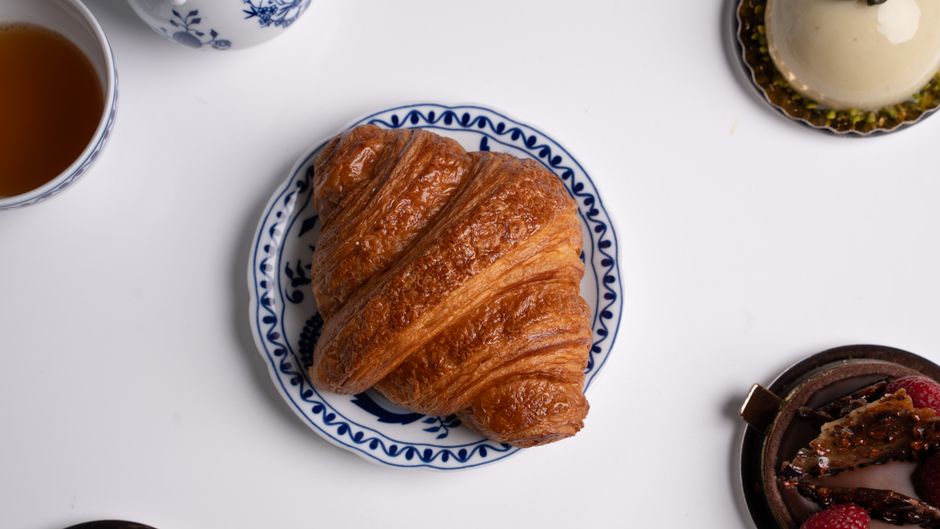
- No visible lamination layers in the cross-section. A properly made croissant shows a honeycomb interior with distinct, separated layers. A dense, bread-like interior suggests the dough was not properly laminated or was made from a low-quality mix.
- Vague answers about whether croissants are baked in-house or sourced from a supplier. Reputable bakeries are transparent about their process.
- Bulk order quotes with no written confirmation or itemised breakdown. Verbal agreements for catering orders are risky, particularly for events.
- Croissants displayed unwrapped for extended periods at room temperature. Freshly baked viennoiseries deteriorate quickly, and a bakery that does not manage display turnover carefully will deliver a substandard product.
- Marketing language claiming “authentic French croissants” with no evidence of French-trained pastry chefs, French butter sourcing, or in-house lamination.
Frequently Asked Questions
How much do croissant cost in Singapore on average?
The average price for a single croissant in Singapore sits around SGD $4 to $6 for a standard café or bakery product. Budget options from chains and supermarkets start at SGD $2, while premium artisan croissants from bakeries doing in-house lamination typically cost SGD $7 to $10. Specialty and signature flavours can go higher.
Why are some croissant prices so much cheaper?
Lower-priced croissants are almost always made from par-baked or frozen dough purchased from a wholesale supplier, rather than laminated in-house. They also tend to use standard commercial butter rather than high-fat European or French butter. The end result is a product that looks similar to an artisan croissant but lacks the depth of flavour, layering, and texture that comes from a proper two to three day in-house process.
Is it worth paying more for croissant in Singapore?
For everyday consumption, a SGD $3 to $4 croissant from a reliable chain such as Hazukido offers decent value. For a weekend treat, a gift, or a catered event where the food quality matters, paying SGD $7 to $10 for a croissant from an artisan bakery using freshly laminated dough and good butter produces a noticeably different result. The gap in quality between the two tiers is real and consistent, not just a matter of branding.
Croissant prices in Singapore reflect the genuine differences in how these pastries are made, what ingredients go into them, and where they are sold. Knowing the price range for each tier, SGD $2 to $4 for budget, $4 to $6 for standard, and $6 to $15 for artisan and specialty, gives you a reliable framework for deciding where to buy and what to expect. Whether you are after a quick morning pastry or sourcing pain au chocolat for a corporate breakfast, matching your budget to the right bakery tier will get you the best result.
For a curated list of top-rated providers, see our guide: Best Croissant in Singapore (2026).