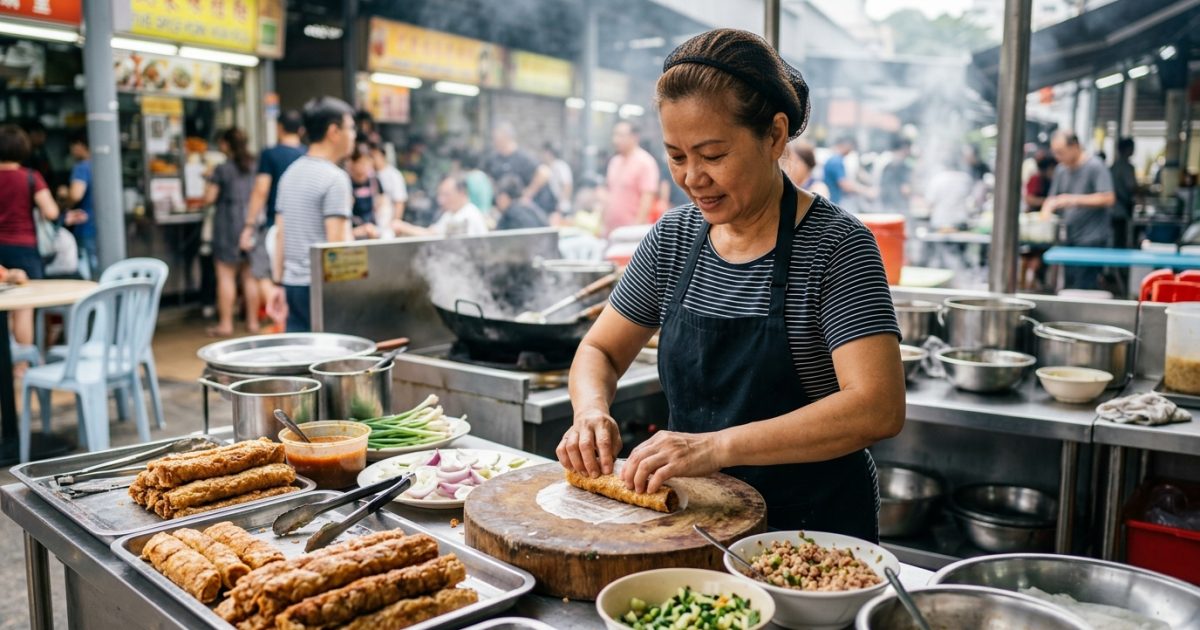
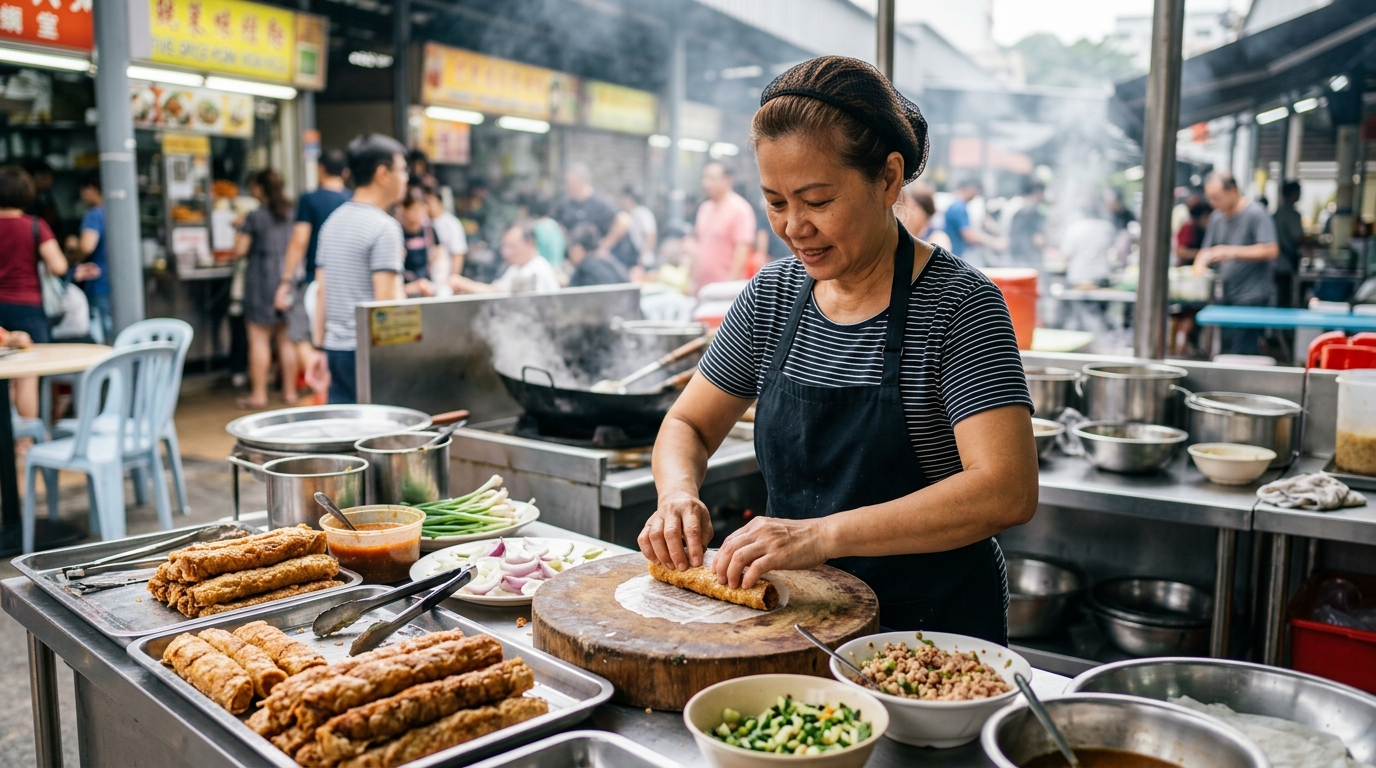
The best ngoh hiang in Singapore comes from a handful of long-standing stalls and restaurants that have refined their recipes over decades. Top picks include Lao Zhong Zhong at Chinatown Complex, Hup Kee Fried Oyster Omelette at Old Airport Road Food Centre, and Koh Brother Pig’s Organ Soup, which also serves a well-regarded ngoh hiang spread. For dedicated ngoh hiang specialists, Jin Ji Teochew Braised Duck and Ngoh Hiang at Chinatown Complex is widely considered a benchmark in the local hawker scene.
Standout Stalls Worth Visiting
Jin Ji Teochew Braised Duck and Ngoh Hiang has operated at Chinatown Complex Food Centre for over 30 years. Their five-spice pork rolls use a recipe passed down through the family, with a filling that balances minced pork, water chestnuts, and prawns. A plate with rice and braised duck costs around $5 to $6, making it one of the better-value plates at that hawker centre.
Lao Zhong Zhong, also at Chinatown Complex, is a straight ngoh hiang specialist. They fry their rolls to order and keep a rotating selection of items including prawn fritters, fish cake, and liver rolls. Portions are generous and prices sit between $3 and $5 per item. Queues build quickly from around 11am, and the stall often sells out before 2pm.
At Old Airport Road Food Centre, Hup Kee is better known for oyster omelette but also serves ngoh hiang on request during peak hours. The beancurd skin on their rolls is thinner than most, giving a crispier result without the heaviness common in thicker-wrapped versions.
What Makes a Good Ngoh Hiang
Ngoh hiang refers to a Hokkien and Teochew dish of meat rolls wrapped in tofu skin, seasoned with five-spice powder (the direct translation of “ngoh hiang”). Quality hinges on three things: the ratio of pork fat to lean meat, the texture of the filling, and how the beancurd skin is handled before frying. Too lean and the roll is dry; too fatty and it becomes greasy. The best versions use water chestnuts for crunch and a light hand with salt.
Dipping sauce matters. Most stalls serve a sweet chilli sauce alongside a fermented prawn paste sauce. The prawn paste version, sharper and more pungent, is traditionally the correct pairing for Teochew-style ngoh hiang.

Frequently Asked Questions
Is ngoh hiang available all day at hawker centres?
Most ngoh hiang stalls operate from late morning through early afternoon. Stalls at Chinatown Complex typically open around 9am and sell out by 2pm. It is worth arriving before midday to guarantee a full selection, especially on weekends.
What is the difference between ngoh hiang and lor bak?
They are regional names for very similar dishes. “Ngoh hiang” is the Hokkien/Teochew term commonly used in Singapore, while “lor bak” is the term more common in Penang, Malaysia. The core preparation is the same: spiced pork rolls wrapped in beancurd skin and fried. Minor ingredient variations exist between family recipes but there is no firm categorical difference.
Are there vegetarian ngoh hiang options in Singapore?
A small number of vegetarian stalls offer tofu-based fillings wrapped in beancurd skin. Stalls at vegetarian food centres such as Zhong He Vegetarian at Chinatown Complex occasionally carry a vegetable version, though availability varies by day.